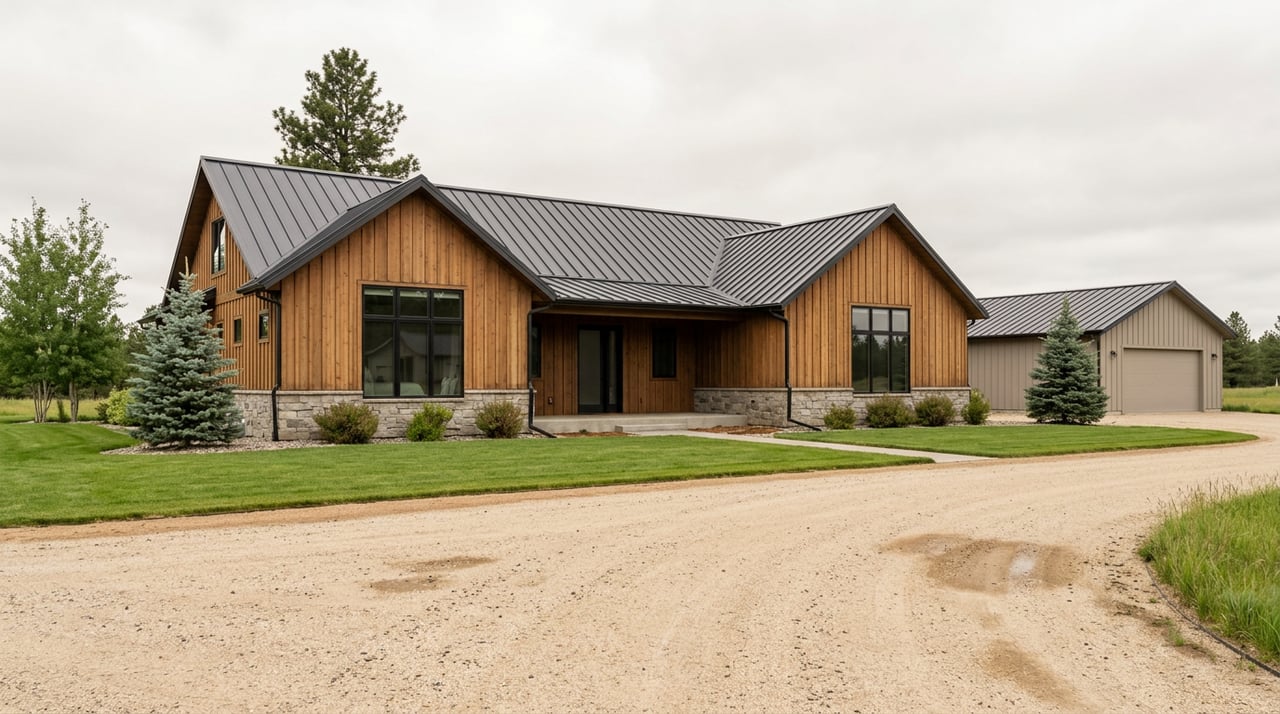
Craving room to breathe, store your toys, or keep a small hobby farm without losing quick access to Idaho Falls? You’re not alone. Many buyers look to Rigby and Jefferson County for bigger lots, practical outbuildings, and a peaceful setting that still keeps the commute easy. In this guide, you’ll learn typical price bands, key zoning rules, the big 2025 change to well and irrigation use, plus septic and permitting steps to help you buy with confidence. Let’s dive in.
Why buy land near Rigby
Rigby puts you close to Idaho Falls while offering more space and a quieter setting. The drive is about 17 miles, or roughly 20 to 25 minutes, depending on route and traffic, according to this simple Rigby to Idaho Falls drive distance reference. With acreage, you can plan for a shop, a small barn, extra parking, or larger outdoor living spaces. You also get flexibility for gardening, small livestock, or simply room to spread out.
What homes with land cost near Rigby
Use these ballpark ranges as a starting point and confirm current MLS comps before you shop.
- Small country lots or large residential lots (about 0.25 to 1 acre): low $300k to $600k+, depending on age, size, and finishes.
- Small acreage (about 1 to 5 acres): roughly $400k to $700k for many homes, influenced by square footage, condition, and whether irrigation or water shares are included.
- Mid acreage (about 5 to 20 acres): about $500k to $1M+ depending on whether the land is irrigated, has recorded water rights or shares, and includes usable outbuildings or improved pasture.
- Large or farm/ranch holdings (20+ acres): pricing varies widely and often uses per‑acre valuations based on agricultural value and water access.
The single biggest price driver is water. Lots with reliable irrigation access or recorded water rights often sit at the higher end of each range.
Zoning basics: city vs. county
If the property is inside Rigby city limits, the city’s ordinance applies. Many acreage properties “near Rigby” sit in unincorporated Jefferson County, where the county’s Planning, Zoning & Building team oversees zoning and permits. You can find contacts and the online portal on the Jefferson County Planning, Zoning & Building page.
Before you assume a use is allowed, verify the parcel’s zoning district and any recorded plat notes or covenant rules. The county’s zoning code outlines districts, permitted uses, and procedures. You can review the Jefferson County zoning code and the county’s ordinances and map resources as part of your early research.
Outbuildings and the 5‑acre ag exemption
If you want barns, storage sheds, or a larger shop, pay attention to parcel size and use. Jefferson County allows certain agricultural‑exempt buildings on true agricultural units of five acres or more when used for qualifying ag purposes. These structures still need a zoning permit, must meet setbacks, and cannot be used for habitation unless converted and brought up to code. See the county’s language on agricultural‑exempt structures for details.
Water, wells, and irrigation: the 2025 change
Water is the most important issue to confirm on any Rigby‑area acreage. Idaho updated statutes in 2025 and the Idaho Department of Water Resources (IDWR) issued guidance on how domestic wells can be used, especially in subdivisions and managed groundwater areas. You can read the agency’s Administrator’s Memorandum for the full interpretation and examples in IDWR’s June 25, 2025 guidance.
Here is the plain‑English impact:
- Idaho law recognizes domestic use thresholds, including irrigation of up to 1/2 acre when total use stays at or below 13,000 gallons per day, and an annual cap of 2.8 acre‑feet for other small domestic uses.
- Under IDWR’s June 2025 guidance, if a domestic well is inside a subdivision and also inside a declared moratorium area or a designated Ground Water Management Area or Critical Ground Water Area, domestic‑exempt uses are limited to in‑home needs and stockwater only. In those restricted areas, you cannot count on a new domestic well to irrigate lawns, gardens, or pasture. Outside those areas, the domestic exemption may still allow limited irrigation under the thresholds.
To see if a property lies in a restricted groundwater area, check IDWR’s page on designated management areas. If a lot is in a subdivision within a restricted area, confirm how irrigation will be provided. Some plats allocate irrigation through canal company shares or HOA‑held rights, which may be recorded during subdivision approval. Local reporting has noted county‑level discussions about how these rules affect new plats and irrigation delivery; see this overview of subdivision irrigation approvals and water‑rights concerns for context.
- Wells still require permits and licensed drillers. For any existing well, request well logs and the driller’s permit.
Check water rights first. A 2025 state interpretation can limit new well irrigation on many subdivision lots in the Upper Snake area. Get parcel‑level confirmation from IDWR and the seller. Review the IDWR guidance memo and ask for recorded proof of any irrigation shares or rights.
Septic basics for rural homes
If a property is not on city sewer, it likely uses an onsite wastewater treatment system. Idaho DEQ sets the statewide rules, and local public health districts handle site evaluations, installation permits, and records. When you buy, ask for septic permits, any “use permit,” and service history. Learn more on DEQ’s septic and septage page.
Soils, setbacks, and replacement area requirements vary by site. If you plan to add bedrooms or build a shop, make sure you know where the septic system, drainfield, and reserve area are located.
Permitting flow for building on acreage
Here is a simple sequence to follow before you build or add structures:
- Confirm zoning and plat notes with Jefferson County Planning, Zoning & Building. Ask for your parcel’s zoning district, setbacks, and any recorded conditions.
- Confirm water early. Review the parcel with IDWR: well logs, whether it sits in a GWMA/CGWA or moratorium, and whether a domestic well allows any outdoor irrigation under current guidance. Start with the IDWR memorandum.
- Verify septic with the local health district through the DEQ septic program. Ask for existing permits, inspections, and whether the site supports expansion.
- Apply for building and zoning permits for new homes, garages, or shops. If you qualify for an agricultural‑exempt structure on 5+ acres, confirm the exemption paperwork and inspections required under the county’s ag‑exempt provisions.
Quick due‑diligence checklist
Use this as a guide during your offer and inspection timelines:
- Recorded plat, legal description, easements, and any conditions on the county ordinances and records page.
- Parcel zoning, permitted uses, setbacks, and accessory‑structure rules from Jefferson County Planning, Zoning & Building.
- Well data: existing well log, driller permit, pump test details, and IDWR status. If no well exists, confirm whether a domestic well would allow any outdoor irrigation given the 2025 rules in the IDWR guidance.
- Irrigation source: recorded water rights or canal‑company shares. Some subdivisions use HOA‑managed shares. See this context on how subdivisions address irrigation and water rights.
- Septic/OWTS: permits, “use permit” at resale if required, service records, and any site studies through the DEQ septic program.
- Outbuildings: confirm setbacks and, for 5+ acre parcels, whether your intended structure qualifies under the ag‑exempt rules.
How Top‑Notch helps you buy with confidence
Buying acreage is different from buying an in‑town home. You want clear answers on water, septic, and what you can build. Our team guides you through parcel vetting, connects you with the right county and state resources, and lines up current market comps so you understand value. We coordinate with Jefferson County on zoning questions, review IDWR mapping and guidance, and help you request the right well and septic records.
If you are ready to find space near Rigby, we are here to help you make a confident move. Reach out to Top‑Notch Real Estate for local advice and a step‑by‑step plan.
FAQs
How long is the commute from Rigby to Idaho Falls?
- It is about 17 miles, typically a 20 to 25 minute drive depending on route and traffic, based on this Rigby to Idaho Falls distance tool.
What are typical price ranges for homes with land near Rigby?
- As ballpark guidance: 0.25 to 1 acre often runs low $300k to $600k+, 1 to 5 acres about $400k to $700k, and 5 to 20 acres about $500k to $1M+, with large farm/ranch parcels priced by acreage and water access.
Can I build a barn or large shop on 5 acres in Jefferson County?
- Often yes, if it qualifies as an agricultural‑exempt structure on a 5+ acre agricultural unit used for ag purposes; you still need a zoning permit, must meet setbacks, and it cannot be used for living space unless fully permitted. See the county’s ag‑exempt provisions.
Can I irrigate my lot with a new domestic well in a subdivision near Rigby?
- Not always. Under IDWR’s June 2025 guidance, if the lot is in a subdivision and inside a restricted groundwater area, domestic wells are limited to in‑home use and stockwater only. Review the IDWR memorandum and check designated areas.
How do I confirm irrigation shares or water rights on a property?
- Ask for recorded rights or canal‑company shares, check plat notes and HOA documents, and confirm any subdivision irrigation setup; see context on subdivision irrigation and water‑rights guidance.
What should I verify for septic on a rural home purchase?
- Request permits, a “use permit” if required, and service records; confirm system location, reserve area, and expansion potential through your local health district and the DEQ septic program.